Everyone Is Busy. Eat Together Anyway.
Everyone is busy. But eating together may be one of the simplest and most important things a family can do.

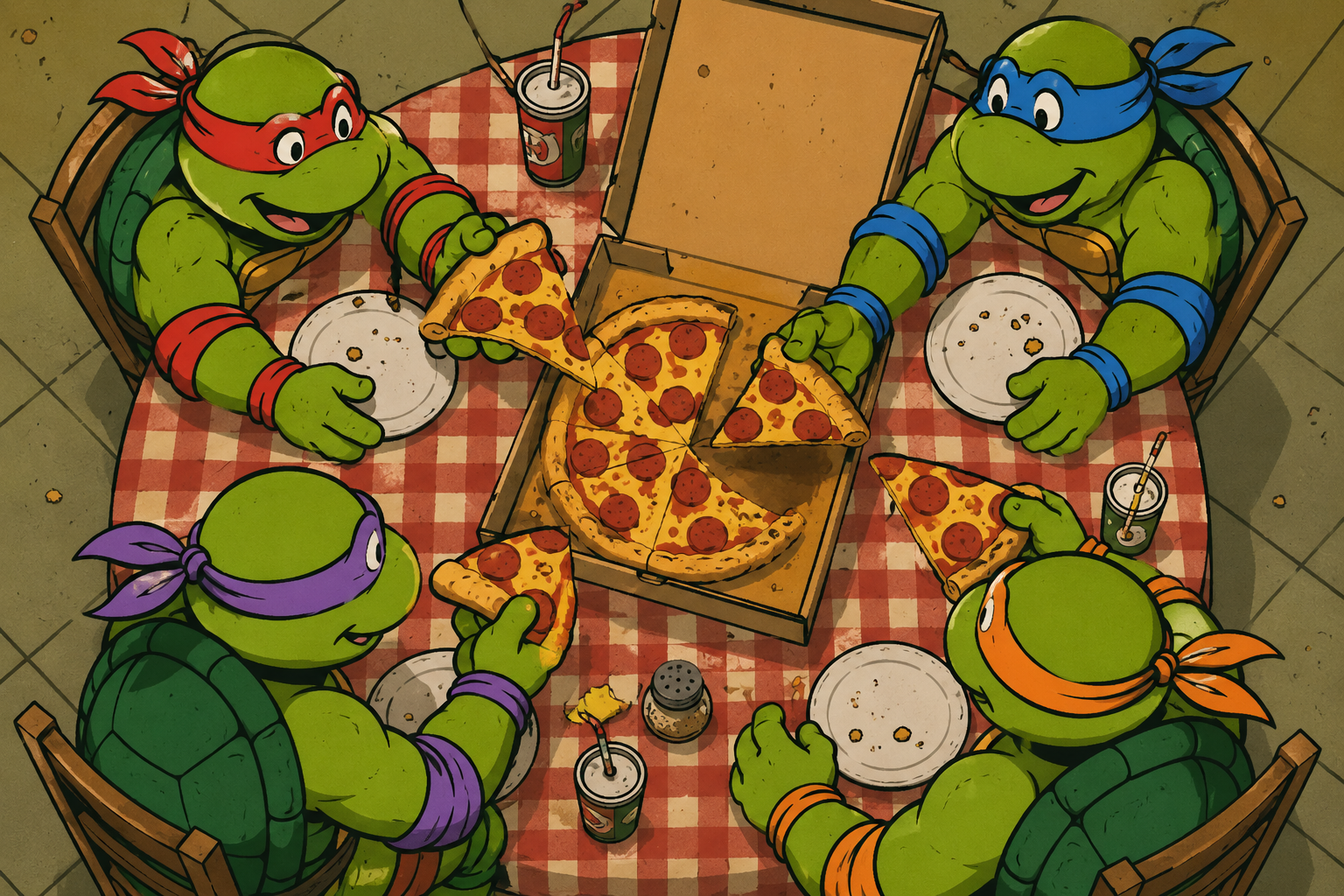
Some of the most important moments in Scripture happen around a table.
From the Passover to the Last Supper, from Jesus feeding thousands to the early church breaking bread in their homes, meals together are included throughout the story of God's people. Again and again, food becomes the backdrop for teaching, fellowship, celebration, hospitality, and grace.
Food itself is rarely the point.
The table is.
A table slows people down. It creates space for conversation, connection, and relationships that deepen over time. Maybe that's one reason shared meals have always mattered.
It may also explain why so many people feel like something is missing when they don't have them.
I often hear families talk about how busy life has become and how hard it is to find time to sit down together. The connection many of us are looking for in other activities may be sitting right there at the dinner table.
One time, my wife and I had one of my work friends over for dinner. Something we do all the time. But for him, it felt like a big event.
“You do this a lot?” he asked. “Eat together?”
“Yeah,” I replied. “Breakfast, lunch, and dinner.”
Then he followed up with something that stuck with me:
“My family never ate together. We would just grab our plates and go to different places.”
Growing up, my family ate together almost every day. Not because my parents were trying to create some grand family tradition. My dad loved routine. Dinner at 5:30 happened whether we were home or on vacation.
Ask my childhood friends, and they'll probably remember me disappearing because it was dinner time.
Before I got married, I didn’t really have much of a dinner routine. A few family friends would occasionally invite me over for a meal, and those nights were always memorable. The rest of the time, dinner was usually Del Taco, Taco Bell, In-N-Out, or whatever was cheap and nearby.
Once we had a family of our own, eating together became something we tried hard to protect.
Not in the sense that our kids go to restaurants while we go somewhere else. I mean something even more basic than that. Sitting down at home together around the table for a meal.
It may not seem important to our kids right now. Honestly, some nights probably feel ordinary or even boring to them. But hopefully, over time, those meals quietly plant seeds for the kind of family they’ll build one day.
Why Eat Together?
For us, dinner is usually the one time everyone is in the same place. It's where we hear about, in the words of one of our friends, "the happy and the crappy" school projects, neighborhood drama, random facts, frustrations, and whatever else is on someone's mind that day.
In a world where everyone is pulled in different directions, shared meals help resist that drift.
Everyone is busy. Work schedules are packed. Kids are in sports. Phones pull attention in every direction. And somehow, one of the simplest things families can do together has become difficult to protect.
One reason family meals disappear is not that families do not care about each other. It is because modern life is optimized for individual convenience. Everyone eats at different times, watches different things, and moves at different speeds. Shared meals require intentionality now in a way they probably did not fifty years ago.
But I think shared meals matter more than we realize.
Not because dinner fixes everything. But because consistency shapes families over time.
A table becomes one of the few places where everyone is fully present for a little while.
The Table Matters More Than the Food
One thing I didn't realize until recently is that family meals help kids in ways unrelated to food.
Researchers at Harvard Graduate School of Education found that ordinary dinner table conversations expose children to a much wider vocabulary than they typically hear elsewhere. Those small daily conversations add up over time and can even contribute to reading and academic success later on.
Maybe our grandparents didn't need a Harvard study to tell them this. They just knew there was value in gathering around a table together.
Once you start looking for it, you notice the same pattern throughout Scripture. God often does important things around tables.
“They broke bread in their homes and ate together with glad and sincere hearts.” — Acts 2:46
“Practice hospitality.” — Romans 12:13
“Do not neglect to show hospitality to strangers...” — Hebrews 13:2
Even Jesus often taught and connected with people over meals. In Revelation, fellowship itself is described through the image of eating together:
“Here I am! I stand at the door and knock. If anyone hears my voice and opens the door, I will come in and eat with that person, and they with me.” — Revelation 3:20
And if your family does not regularly eat together, this is not meant to make you feel guilty. Modern life genuinely makes it difficult. Parents are exhausted. Schedules are crowded. Some seasons are simply harder than others.
But you probably do not need perfection to begin.
Start Small
Maybe it is two meals a week. Maybe it is pizza at the kitchen counter. Maybe it's pancakes on Saturday. Maybe everyone puts their phones away for twenty minutes and simply talks. The goal is not to create a perfect family moment. The goal is to create a rhythm of presence.
And if you live alone, invite someone over. Share a meal with friends, neighbors, grandparents, or people from church. Hospitality does not need to be elaborate to matter.
If this isn't a habit in your home right now, don't overcomplicate it.
You don't need a perfectly cooked meal, a dining room table, or seven nights a week. Start with one meal. Put the phones away. Ask a few questions. Listen.
The goal isn't perfection. It's simply being together.
Some nights, the conversation is great. Other nights, someone spills milk, and another kid wanders off before dinner is over. That's family life.
But those ordinary meals add up.
Most of them won't feel important at the time. In fact, most will be completely forgettable.
Years later, though, they often become the moments people remember.
Not because of what was served.
Because of who was there.
That's why we keep coming back to the table.
Further Reading
Charlie Rose
I write Quietly Rad from Naples, Florida. Short essays on fatherhood, marriage, faith, and the daily work of showing up.
Most popular
- 01
- 02
- 03
Home & Life
Why Every Family Needs Other Families - 04